
Collection entry
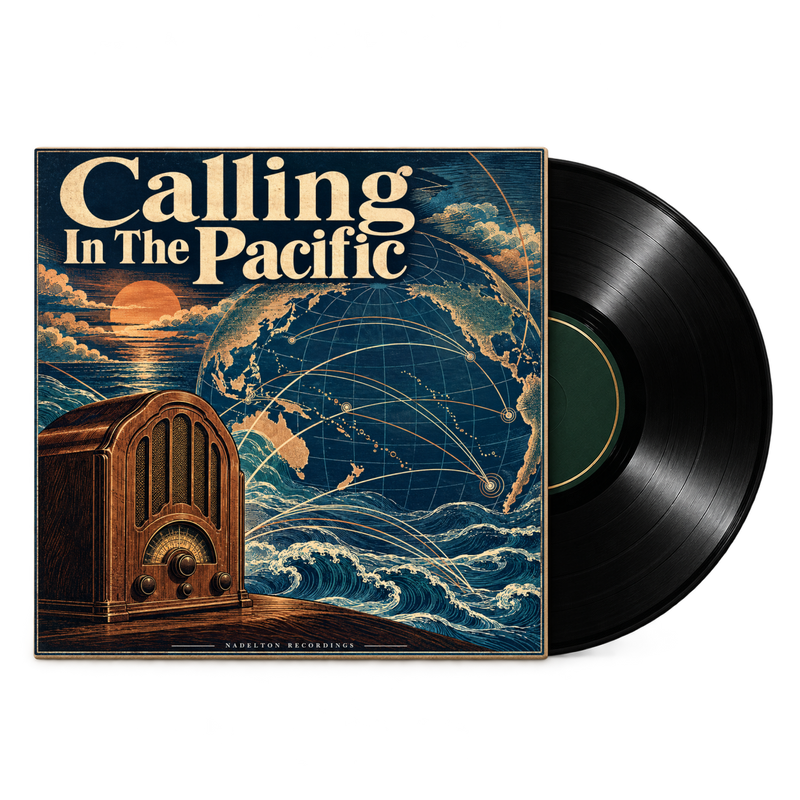
Calling In The Pacific
Three unidentified entries carry the title Calling In The Pacific. Selected histories of wartime broadcasting illuminate music, propaganda and captivity, while the collection’s geographical label establishes no programme, speaker or country of origin.
Language not yet verified
3 source files · About 46 minutes
Download only · No physical CD
Audio language and vocal or instrumental content remain unverified.
Listen before you buy
Track 01
$9.99
Digital record download
Download details
MP3 recordings in one ZIP download (about 88.0 MB). Download only · No physical record or CD.
Tracklists, historical notes and sources are available on this website.
The recordings
- Track 01 (unidentified)23:08
- Track 02 (unidentified)22:09
- Track 03 (unidentified)0:48
Behind the sound
Wartime radio, familiar voices and coercion
DocsTeach describes a surviving Zero Hour broadcast of 14 August 1944 for Allied forces in the South Pacific, combining music, war commentary and news from the United States. It offers a documented example of radio’s mixed formats. No connection between that broadcast and these three entries has been established.
Tokyo Rose was a name servicemen applied to several female broadcasters, according to the U.S. National Archives; Iva Toguri broadcast as Orphan Anne. The official pardon register records her pardon on 19 January 1977. This history warns against turning a familiar radio label into a speaker credit for unidentified material.
When broadcasts became courtroom evidence
A broadcast’s history can continue long after transmission. The U.S. National Archives describes more than nine hours of 1944–45 Zero Hour recordings, monitored by the Foreign Broadcast Intelligence Service and later submitted as evidence in the prosecution of Iva Ikuko Toguri D’Aquino. These recordings therefore have a legal and archival history as well as a broadcasting one.
The Australian War Memorial describes prisoner of war Charles Cousens’s involvement in Radio Tokyo and Zero Hour, including scripts and prisoner messages with double meanings. His experience brings coercion and individual circumstances into the interpretation of wartime voices. It does not identify Cousens or another prisoner in the supplied files.
Presented for critical historical study of wartime media, propaganda and coercion. The circumstances of captives and the dangers of unverified speaker attribution remain central.