
Collection entry
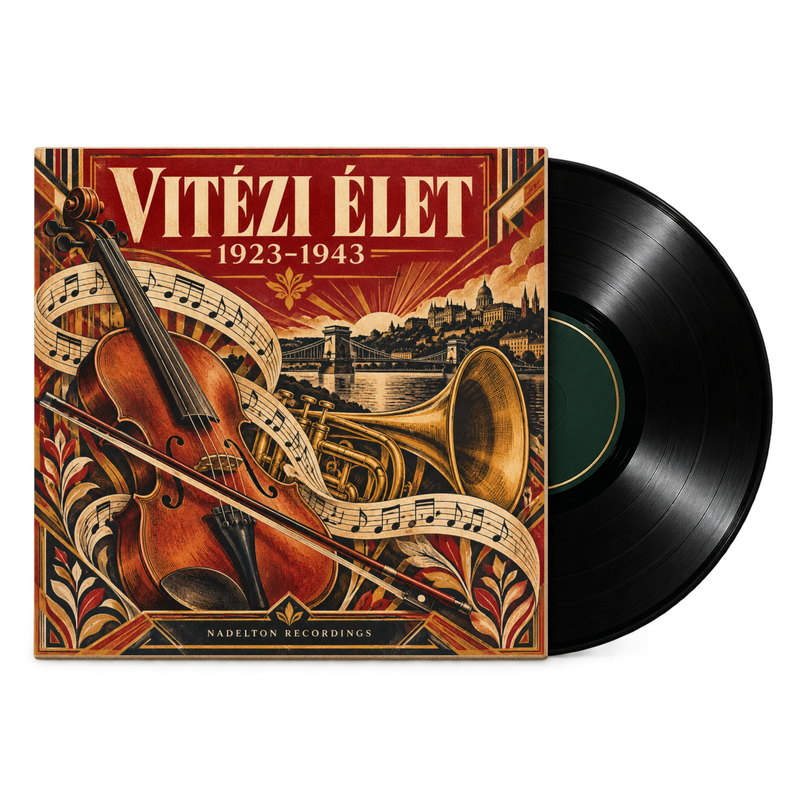
Vitézi élet 1923-1943
Twenty unidentified files carry generic track labels beneath a Hungarian collection title. The notes explore political culture, musical messaging, war and persecution at collection level; the title’s dates do not authenticate any recording.
Language not yet verified
20 source files · About 52 minutes
Download only · No physical CD
Audio language and vocal or instrumental content have not yet been verified.
Listen before you buy
Track 01
$9.99
Digital record download
Download details
MP3 recordings in one ZIP download (about 99.1 MB). Download only · No physical record or CD.
Tracklists, historical notes and sources are available on this website.
The recordings
- Track 01 (unidentified)2:54
- Track 02 (unidentified)2:27
- Track 03 (unidentified)2:06
- Track 04 (unidentified)2:40
- Track 05 (unidentified)2:19
- Track 06 (unidentified)2:49
- Track 07 (unidentified)2:41
- Track 08 (unidentified)2:46
- Track 09 (unidentified)2:57
- Track 10 (unidentified)2:30
- Track 11 (unidentified)1:44
- Track 12 (unidentified)2:56
- Track 13 (unidentified)3:23
- Track 14 (unidentified)2:38
- Track 15 (unidentified)2:32
- Track 16 (unidentified)2:38
- Track 17 (unidentified)2:55
- Track 18 (unidentified)2:50
- Track 19 (unidentified)3:04
- Track 20 (unidentified)1:21
Behind the sound
Military ideals, national messaging and persecution
Horthy became regent in 1920 while Hungary formally remained a kingdom. The National Archives describes the Vitézi Rend’s land grants, initiations, uniforms and cultural activity, which fostered loyalty and a military social ideal. This history helps frame the collection’s wording, without establishing membership, an official ensemble or a recorded ceremony in any of its files.
Music also served territorial revisionism and national messaging. An archival study of interwar Kecskemét documents the use of songs, flags, meetings and publications after Trianon. Hungary’s regular radio service opened with a concert in December 1925, within a wider nationalist media setting. None of these sources identifies an unnamed track, its political text or a radio origin.
Persecution was part of the same political history. Anti-Jewish university restrictions began in 1920, further laws followed in 1938–1941, and Jewish men suffered coercion and deadly abuse in labour service. These measures preceded Germany’s 1944 occupation. This context belongs beside a military-era collection label, without implying that the unidentified recordings document or acknowledge those harms.
Presented for critical historical study of Hungarian political culture, revisionism, war and antisemitic persecution. Fascism, Nazism and the persecution of others are not endorsed.