Collection entry
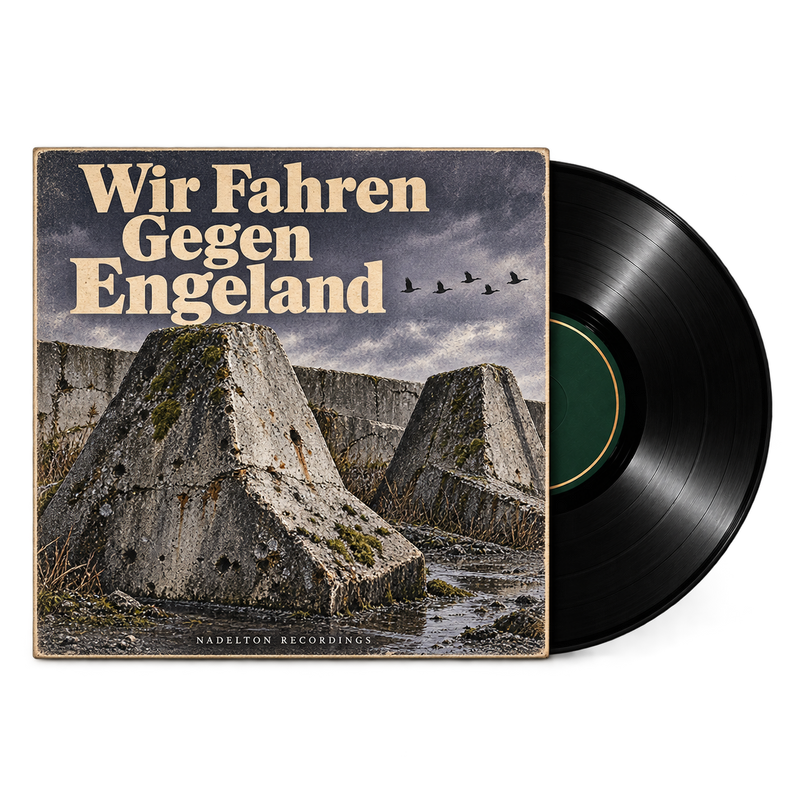
Wir Fahren Gegen Engeland
Fourteen supplied filenames connect anti-British propaganda, military commemoration and older song repertories. Their historical associations differ; the notes preserve those distinctions without assigning unverified performers, dates or languages.
Language not yet verified
14 source files · About 43 minutes
Download only · No physical CD
Audio language and vocal or instrumental content have not yet been verified.
Listen before you buy
Wir Fahren Gegen Engeland
$9.99
Digital record download
Download details
MP3 recordings in one ZIP download (about 81.1 MB). Download only · No physical record or CD.
Tracklists, historical notes and sources are available on this website.
For personal, noncommercial use. Please do not resell or share downloads. Download use terms
The recordings
Wir Fahren Gegen Engeland3:25
Historical Context
The German Historical Museum dates Hermann Löns’s Matrosenlied to 1910 and Herms Niel’s setting to 1939. The Nazis used it as the Engellandlied to promote the planned invasion of Britain; a postcard from about 1940 documents that propaganda setting.
Recording details
This work comparison does not merge the opening title with the differently worded final track or identify either performance.
Sources & Resources
Institutional object-page text inspected on 15 October 2026; the postcard image was not reproduced or used to identify audio.
Siegfried Line3:13
Historical Context
The Westwall, also called the Siegfried Line, was Germany’s western fortification system. Its construction involved the Organisation Todt and Reichsarbeitsdienst, while Nazi propaganda presented the defences as an invulnerable barrier. The name therefore carried a political image as well as a geographical meaning.
Recording details
The short supplied title does not select a particular song, parody, medley or language version.
Sources & Resources
Institutional historical essay inspected on 15 October 2026; title context only.
Kamarad Wir Marschieren2:56
Historical Context
A Wilke & Co. notice dated 12 August 1940 lists Kamerad, wir marschieren im Westen, also called Frankreichlied, under Herms Niel, with H. Anacker named and arrangements offered. The publishing notice shows the campaign song moving into printed performing editions.
Recording details
The longer printed title is a comparison for the supplied Kamarad Wir Marschieren. The notice’s date and arrangement credits do not date or identify this performance.
Sources & Resources
Based on institutional indexed OCR checked on 15 October 2026; direct PDF access reached a bot-check page and the original notice image was not inspected.
SLUB Dresden: Börsenblatt, 12 August 1940, music-publishing notices
- Pariser Einzugsmarsch4:14
Bomben Auf Engeland2:51
Historical Context
The National Library of Finland catalogues Voiton tie as a Finnish adaptation of Bomben auf Engeland, with music credited to Norbert Schultze. That cross-language circulation sits beside the civilian consequences of the air war: the Bundesarchiv documents German attacks on British cities and extensive loss of life.
Recording details
The Finnish catalogue describes a separate Helsinki recording from 1942. Its language, performers and date must not be transferred to this supplied file.
Sources & Resources
Institutional indexed catalogue text checked on 15 October 2026; full record not directly inspected. Helsinki 1942 describes a separate catalogue recording. Bundesarchiv text and relevant image caption inspected on 15 October 2026; historical background only.
National Library of Finland: Voiton tie, Bomben auf Engeland adaptation
Bundesarchiv: Bomben auf Berlin, historical background on the air war
- Kaiserjaegermarsch2:50
Leo Schlageter Marsch2:57
Historical Context
Albert Leo Schlageter was a former soldier and Freikorps activist involved in sabotage during the Ruhr occupation. A French military court sentenced him to death, and he was executed on 26 May 1923. The NSDAP later built a martyr cult around his commemoration.
Recording details
This history explains the named figure’s political significance; it does not establish the march’s composer, version or recording.
Sources & Resources
Institutional chronology inspected on 15 October 2026; biographical and propaganda context only.
- Gegen Briten Und Franzosen3:03
- Argonnerwald3:04
Wildgaenze Rauschen Durch Die Nacht3:06
Historical Context
Walter Flex’s 1915 poem became part of his 1916 war narrative Der Wanderer zwischen beiden Welten. Scholarly commentary traces Wildgänse through youth movements, Nazi adoption and groups persecuted under Nazism. Its later meanings depended on the community, text and setting in which it was used.
Recording details
The poem, later musical settings and text variants remain distinct. No version, political affiliation or performance community is assigned to this supplied recording.
Sources & Resources
Scholarly commentary and edited transcription inspected on 15 October 2026; underlying original edition/manuscript not inspected. Use 1915 without a precise composition date.
Catherina Schreiber-Jung: Walter Flex, Wildgänse rauschen durch die Nacht
- Der Tod In Flandern2:58
- Rueber Ueber Den Kanal2:39
- Torpedo Los!2:50
- Wir Ziehen Nach Engeland2:39
Behind the sound
Songs reused for wartime propaganda
An older text became part of invasion propaganda. The Deutsches Historisches Museum dates Hermann Löns’s Matrosenlied to 1910 and Herms Niel’s setting to 1939, describing its Nazi use as the Engellandlied. This is a work-comparison lead for the opening title. The differently worded final title remains separate, and neither filename authenticates a particular version or performance.
Bombing songs need to be read alongside the civilian consequences of air war. The Bundesarchiv documents German bombing of British cities and extensive civilian losses. A Finnish adaptation of Bomben auf Engeland, catalogued by the National Library of Finland, also shows why a familiar title cannot establish the language heard in a recording. The supplied performance remains unidentified.
Nazi cultural control excluded Jewish artists and political opponents while using music for mobilization. Commemoration served propaganda too: the regime promoted Albert Leo Schlageter as a martyr after his 1923 execution. Other songs travelled through competing settings. Scholarly commentary traces Wildgänse through youth movements, Nazi adoption and groups persecuted under Nazism. These histories call for attention to each version and setting, rather than a single meaning for every title.
Presented for critical historical study. Nazi ideology, persecution and violence are not endorsed.